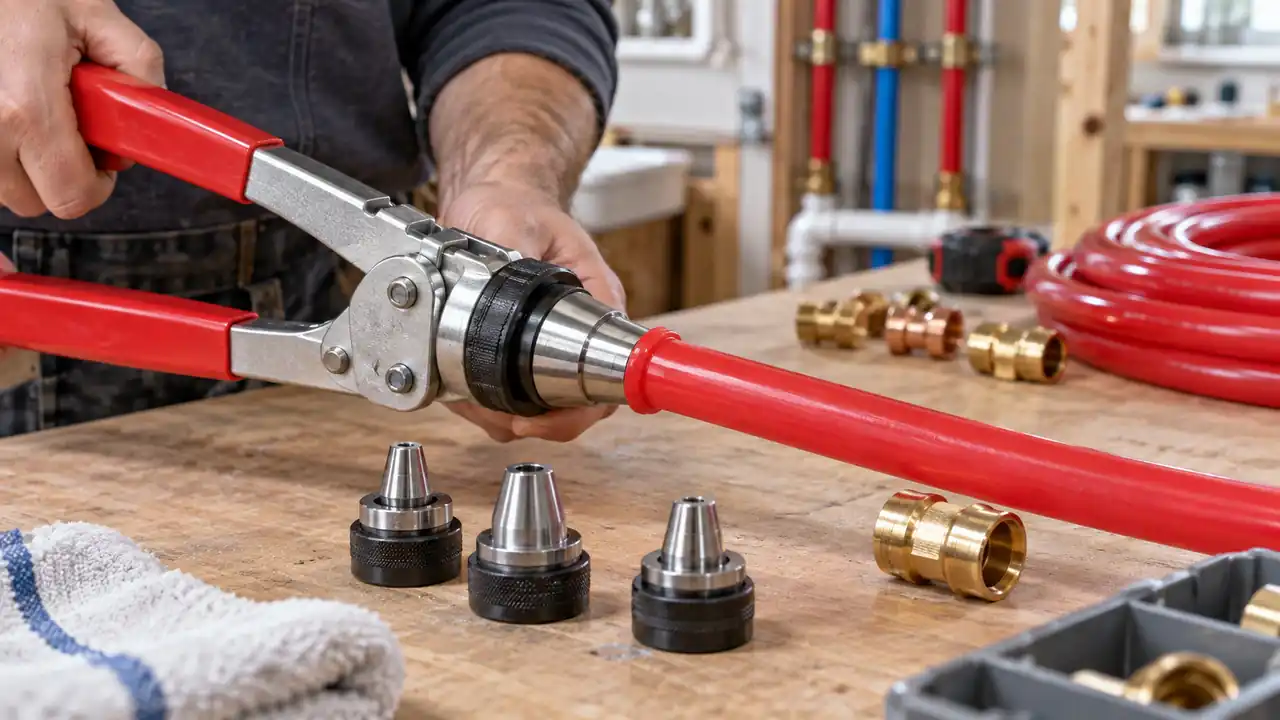
A PEX expansion tool can turn a clean tubing run into a fast, dependable installation, but the wrong tool can leave you fighting stiff handles, uneven expansion, or incompatible pipe. A homeowner replacing a few lines under a sink has different needs from a plumber making dozens of connections in a new radiant-heating system. The first question is simple: are you working with PEX-A and ASTM F1960 expansion fittings? These tools are generally not intended for PEX-B or PEX-C, so checking the tubing and fitting system before ordering matters more than any extra accessory.
The best options differ in operating method, supported sizes, rotation system, and workload. Manual expanders are portable and economical, while cordless models reduce hand fatigue during larger installations. Auto-rotating heads help distribute expansion around the tubing, and included cutters, cases, lubricants, or ring-removal tools can make a kit more useful during repairs. Among the nine options below, the iCrimp Ratcheting PEX Expansion Tool Kit offers the most balanced combination of auto rotation, common residential sizes, and practical kit contents for many buyers.
If you need a quick comparison before reading the detailed reviews, the table below highlights the main differences among the leading PEX-A expansion tools.
Quick Answer
- Best Overall: iCrimp Ratcheting PEX Expansion Tool Kit for balanced manual operation, auto rotation, and common ProPEX sizes.
- Best Cordless Value: VEVOR 20V Max Cordless Tube Expander for buyers who want powered expansion with two batteries and a work light.
- Best Professional Option: DEWALT 20V MAX PEX Expander Tool Kit for demanding jobsite use and support for 3/8-inch through 1-inch PEX-A.
- Best Complete Manual Kit: IWISS PEX-A Expansion Tool Kit for buyers who need a 3/8-inch head and a ring-removal tool.
Best PEX Expansion Tools Comparison Table
| Product | Best For | PEX-A Sizes | Operation and Key Feature |
|---|---|---|---|
| iCrimp Ratcheting PEX Expansion Tool Kit | Best overall | 1/2, 3/4, 1 inch | Manual ratchet with auto rotation |
| VEVOR 20V Max Cordless Tube Expander | Cordless projects | 1/2, 3/4, 1 inch | Powered, auto-rotating head, LED |
| DEWALT 20V MAX PEX Expander Tool Kit | Professional workloads | 3/8 inch to 1 inch | Cordless, automatic rotation, full trigger |
| IWISS PEX-A Expansion Tool Kit | Complete size coverage | 3/8, 1/2, 3/4, 1 inch | Manual ratchet with ring removal tool |
| iCrimp PEX-A Expansion Tool Kit | Reach and leverage | 1/2, 3/4, 1 inch | Manual extendable handle with indexed rotation |
| SharkBite PEX-A Expansion Tool Kit | Brand-focused DIY repairs | 1/2, 3/4, 1 inch | Manual ratchet with auto-rotating heads |
| Saker PEX Tube Expansion Tool Kit | Basic manual installations | 1/2, 3/4, 1 inch | Aluminum manual tool with cutter and case |
| AMZCNC PEX Expansion Tool Kit | First-time DIY users | 1/2, 3/4, 1 inch | Manual tool with rotation guide |
| RIDGID 90763 PEX Expansion Tool | Fast professional work | PEX Type-A sizes listed by manufacturer | Powered brushless motor with AutoReturn |
The reviews below put those differences into context, including compatibility details, useful kit contents, and the trade-offs that may matter during an actual installation.
1. iCrimp Ratcheting PEX Expansion Tool Kit: Best Overall

The iCrimp ratcheting kit hits the useful middle ground for many residential PEX-A projects. Its built-in ratcheting mechanism and auto-rotating heads are intended to spread expansion around the tubing as the handles cycle, which is helpful when you are working beneath a vanity or between joists and do not have much room to reposition the tool. The included 1/2-inch, 3/4-inch, and 1-inch heads cover the sizes most commonly encountered in home water-supply work.
The kit also includes a cutter for tubing from 1/8 inch through 1 inch, according to the listing. That makes it easier to move from measuring and cutting to expansion without reaching for another tool. It is still a manual expander, so repeated large-size connections require hand effort, yet the ratcheting action should be more comfortable than a basic straight-handle design. Buyers should verify that their pipe is PEX-A and that their fittings use the ASTM F1960 expansion method before choosing it.
Pros
- Built-in ratcheting mechanism supports repeated manual expansion.
- Auto-rotating heads help distribute expansion around the tube.
- Includes 1/2-inch, 3/4-inch, and 1-inch expansion heads.
- Includes a tubing cutter for sizes listed from 1/8 inch through 1 inch.
- Suitable for Uponor-style ProPEX PEX-A systems according to the listing.
Cons
- Manual operation requires more hand effort than powered alternatives.
- It is intended for PEX-A expansion systems, rather than PEX-B or PEX-C.
This is the most balanced pick for a homeowner, remodeler, or service plumber who wants auto rotation without committing to a cordless motor. It is especially practical for a medium-sized repair where portability and simple storage matter. Buyers completing a large installation may prefer a powered model, while anyone working with 3/8-inch expansion connections should choose a kit that includes that head. For ordinary 1/2-inch through 1-inch PEX-A work, the iCrimp configuration is easy to justify.
To buy this product, click here.
2. VEVOR 20V Max Cordless Tube Expander: Best Cordless Value

A powered expander can feel dramatically different during a long day of repetitive connections. The VEVOR model uses a 20V cordless platform, a brushless motor listed at 22,000 RPM, and trigger operation, so the user does not have to repeatedly squeeze manual handles. Its 360-degree auto-rotating head is intended to create even expansion, while the built-in LED can help illuminate the connection when a pipe disappears into a dark cabinet or floor cavity.
Two 2.0Ah lithium battery packs and a fast charger are included, giving this kit a practical advantage for mobile work. The package also includes heads for 1/2-inch, 3/4-inch, and 1-inch PEX-A. It arrives in a toolbox with a non-slip grip and a streamlined body, details that suit repair work where the nearest outlet may be across the room. The listing specifically says to add lubricating oil before use, so maintenance should be treated as part of the operating routine.
Pros
- Cordless powered operation reduces repeated hand squeezing.
- Includes two 2.0Ah battery packs and a fast charger.
- 360-degree auto-rotating head is intended for uniform expansion.
- Built-in LED helps light cramped or dim work areas.
- Includes 1/2-inch, 3/4-inch, and 1-inch heads in a protective case.
Cons
- Requires battery charging and lubrication before use.
- Its powered format is more equipment than a homeowner needs for a single small repair.
The VEVOR is a sensible step up for people who expect to make many connections but do not need to buy into a larger professional tool ecosystem. It suits remodels, heat-pump plumbing projects, and longer runs where manual expansion becomes tiring. A manual kit remains simpler to store and maintain, while buyers who already own compatible professional batteries may prefer a matching brand. Check the included head sizes against the fittings before starting.
To buy this product, click here.
3. DEWALT 20V MAX PEX Expander Tool Kit: Best for Professionals

The DEWALT DCE400D2 is aimed at users who treat a PEX expander as a regular jobsite tool rather than an occasional repair accessory. Its listed range covers 3/8-inch through 1-inch PEX Type-A tubing, giving it broader size coverage than the three-head kits in this roundup. Automatic rotating head action is intended to keep expansion even, and full trigger actuation helps with positioning when the tool is pressed into a tight framing bay or cabinet corner.
A bright LED, rubber overmold, and dual-sided hang and belt hooks add practical jobsite touches. The listing also states that the tool uses DEWALT PEX heads and is compatible with Milwaukee and Uponor heads, though buyers should verify head compatibility and included components for their specific setup. This kit makes the most sense for professionals or serious remodelers who value cordless workflow and already use the DEWALT 20V MAX system.
Pros
- Supports a broad listed range from 3/8-inch through 1-inch PEX Type-A.
- Automatic rotating head action supports even expansion.
- Full trigger actuation is useful in confined installation areas.
- LED work light improves visibility around dark connections.
- Rubber overmold and belt hooks support jobsite handling.
Cons
- Its professional cordless design may be excessive for occasional home repairs.
- Buyers should verify which PEX heads are included and which must be added separately.
Choose the DEWALT when time, repeatability, and access matter more than a compact manual kit. It is particularly relevant for crews moving through multiple rooms or making a mix of smaller and larger PEX-A connections. A casual DIY user may find a ratcheting manual tool easier to justify, while a DEWALT platform owner gets more value from keeping batteries and tool controls familiar. Compatibility still comes first, regardless of brand recognition.
To buy this product, click here.
4. IWISS PEX-A Expansion Tool Kit: Best Complete Manual Kit

The IWISS kit is unusual among the manual choices because it includes four expansion heads: 3/8 inch, 1/2 inch, 3/4 inch, and 1 inch. That extra smaller head can matter during compact fixture connections or repair work where a three-head kit leaves you searching for another tool. Color-coded rings are intended to make head selection quicker, a small detail that becomes handy when several parts are spread across a plywood work surface.
The ratcheting mechanism provides auto rotation as the handles open and close, while the included cutter handles listed PEX, PE-RT, PVC, and other thin-walled plastic tubing sizes. Its ring-removal tool is the real differentiator. A connection can occasionally need modification, and having a dedicated removal accessory may be preferable to improvising with a knife or pliers. The tool remains limited to compatible PEX-A expansion work, so the broader cutter capability does not turn it into a universal PEX tool.
Pros
- Includes four expansion heads from 3/8 inch through 1 inch.
- Ratcheting operation supports auto rotation during expansion.
- Color-coded head rings simplify size identification.
- Includes a dedicated expansion sleeve removal tool.
- Included cutter supports the listed PEX and other thin-walled tubing sizes.
Cons
- Manual operation can be tiring during a high-volume installation.
- The extra accessories add kit bulk compared with a basic three-head set.
This is a strong fit for service work, remodels, and buyers who prefer to have a solution ready for mistakes or future changes. The ring-removal tool gives it a repair-oriented advantage that the simpler kits lack. Someone doing one 1/2-inch connection may not need the expanded kit, while a plumber who regularly encounters varied sizes can make better use of it. Confirm the fitting system before relying on any included head.
To buy this product, click here.
5. iCrimp PEX-A Expansion Tool Kit: Best for Extra Leverage

The iCrimp extendable-handle kit approaches manual expansion from a leverage and reach perspective. Its handle can extend, which may help when a connection sits farther inside a cabinet or when the user wants a more comfortable grip during larger-size expansion cycles. The three included heads cover 1/2-inch, 3/4-inch, and 1-inch PEX-A, the sizes most likely to appear in common residential supply installations.
Its indexed auto-rotating heads advance after each full handle cycle. That detail matters because the operator needs to fully open and close the handles for the rotation mechanism to work properly. The kit also includes a cutter, lubricant, and carrying case. Buyers should expect that larger tubing may require multiple expansion cycles, as the product listing states, so the extendable handle improves leverage rather than eliminating manual work.
Pros
- Extendable handle provides extra reach and leverage.
- Indexed heads advance after each complete handle cycle.
- Includes 1/2-inch, 3/4-inch, and 1-inch expansion heads.
- Includes a cutter, lubricant, and carrying case.
- Designed for ASTM F1960 and ProPEX-style PEX-A systems.
Cons
- Large tubing may require multiple expansion cycles.
- Rotation depends on fully opening and closing the handles correctly.
This kit suits DIYers who want manual control but dislike the short reach of compact expanders. It can also be useful for repair technicians carrying one tool between several cramped locations. Buyers who want one-trigger operation should look at a cordless model, and those who rarely work beyond 1/2 inch may not benefit much from the extended handle. Proper cycling technique is central to getting the intended auto-rotation benefit.
To buy this product, click here.
6. SharkBite PEX-A Expansion Tool Kit: Best for Straightforward Repairs

The SharkBite kit keeps the manual expansion process familiar and focused. It includes a ratcheting expander, interchangeable 1/2-inch, 3/4-inch, and 1-inch heads, lubricant, and a carrying case. For a homeowner standing beside an open wall with a short list of fittings, that straightforward package is appealing because the essential pieces stay together instead of being scattered across a tool box.
The tool is intended for F1960 PEX-A expansion connections. The basic sequence is to expand the tubing, insert the fitting, and hold the connection while the ring and tubing contract around it. That process differs from crimp and clamp systems, so a buyer replacing a crimp tool should not assume this kit works with existing PEX-B fittings. SharkBite branding may also appeal to buyers who prefer a familiar plumbing name, though the tubing and fitting standard remain the decisive compatibility checks.
Pros
- Includes a manual ratcheting expansion tool.
- Provides 1/2-inch, 3/4-inch, and 1-inch interchangeable heads.
- Includes lubricant and a carrying case.
- Built for the F1960 PEX-A expansion system.
- Compact kit format suits repairs and occasional installations.
Cons
- It does not support PEX-B or PEX-C expansion applications.
- Manual operation is slower and more labor-intensive than powered tools.
The SharkBite kit makes sense for a buyer who wants a recognizable, focused manual tool for PEX-A repairs. It is a better match for moderate work than for a production-style installation where a powered expander saves time. The included case helps keep the heads and lubricant together, while the three-head range covers common home sizes. Check the exact connection method in your project documents before opening the package.
To buy this product, click here.
7. Saker PEX Tube Expansion Tool Kit: Best Basic Manual Set

The Saker kit takes a lightweight, mechanical approach to PEX-A expansion. Its aluminum-alloy construction is intended to keep the tool manageable in elevated or confined spaces, while the chrome-plated spring-steel cone is listed for corrosion and weather resistance. The package includes 1/2-inch, 3/4-inch, and 1-inch heads, a tubing cutter, lubricant, and a carrying case, making it a practical starting point for a basic residential project.
This tool is designed for ASTM F1960 expansion fittings and is specifically listed as unsuitable for PEX-B. That distinction should be checked before purchase because pipe may look similar across connection systems while requiring entirely different tooling. The manual design avoids batteries, chargers, and motor maintenance, which can be useful for a homeowner who needs a tool in a remote utility room or for an occasional repair.
Pros
- Lightweight aluminum-alloy construction suits portable manual work.
- Includes 1/2-inch, 3/4-inch, and 1-inch expansion heads.
- Includes a tubing cutter and lubricant.
- Chrome-plated spring-steel cone is listed for corrosion resistance.
- Carrying case keeps the kit organized for transport.
Cons
- It is not intended for PEX-B tubing.
- Manual operation offers less speed for large, repetitive installations.
The Saker is most appropriate for a homeowner, landlord, or occasional remodeler who wants the core pieces without a powered platform. It offers useful portability and a complete basic package, although users should not expect cordless-tool speed. Buyers needing 3/8-inch connections or an auto-rotating ratchet should select a different kit. For common 1/2-inch through 1-inch PEX-A work, its simple format keeps the learning curve manageable.
To buy this product, click here.
8. AMZCNC PEX Expansion Tool Kit: Best for First-Time DIY Users

The AMZCNC kit is aimed at buyers who want extra guidance during their first PEX-A expansion project. Along with 1/2-inch, 3/4-inch, and 1-inch heads, the listing describes a clear rotation guide intended to help prevent uneven expansion. That kind of visual cue can be useful when a first-time installer is concentrating on keeping the tube straight, applying lubricant, and completing each cycle correctly.
The high-strength aluminum-alloy tool includes a cutter, lubricant, and case. It is listed as compatible with ASTM F1960 systems and names several expansion-fitting families, including Uponor ProPEX, Sioux Chief PowerPex, Everflow PexFlow, and Apollo ExpansionPex. Those references are helpful starting points, but the fitting manufacturer’s instructions should still control the final compatibility decision. A manual design keeps the process quiet and portable, though it asks the user to supply all the effort.
Pros
- Includes a rotation guide intended to support more even expansion.
- Provides 1/2-inch, 3/4-inch, and 1-inch heads.
- Includes a cutter, lubricant, and carrying case.
- Uses lightweight aluminum-alloy construction.
- Listing identifies compatibility with ASTM F1960 PEX-A systems.
Cons
- It lacks the powered operation offered by cordless alternatives.
- Its three-head range does not include a 3/8-inch expansion head.
This is a reasonable pick for the DIYer who wants a manual kit with a little more process support. It fits a bathroom remodel, utility-room repair, or small supply-line project where the number of connections is limited. A professional making dozens of joints may prefer auto-rotating ratchets or a motorized tool, and users with 3/8-inch tubing need broader head coverage. The guide helps, but careful preparation still matters.
To buy this product, click here.
9. RIDGID 90763 PEX Expansion Tool: Best for High-Volume Work

The RIDGID 90763 focuses on reducing the small pauses that add up during repetitive PEX-A installation. Its AutoReturn feature is listed as returning the expander heads to the closed position after each cycle, while the brushless motor provides powered operation. The auto-rotating head system is intended to distribute expansion evenly, and a paddle trigger supports one-handed operation when the other hand is holding tubing or guiding a fitting.
A compact housing, belt hook, integrated LED, and maintenance indicators give the tool a jobsite-oriented configuration. Those features can make sense for professional residential or commercial plumbing work where access changes from one connection to the next. The available listing emphasizes Type-A PEX and repeatable expansion, so buyers should confirm the exact head sizes and system compatibility for their project rather than assume that a powered tool covers every PEX format.
Pros
- AutoReturn is intended to reset the expander head after each cycle.
- Brushless motor supports powered, repetitive operation.
- Auto-rotating head system is intended for uniform expansion.
- Integrated LED and paddle trigger support work in tight spaces.
- Maintenance indicators and belt hook suit regular jobsite use.
Cons
- Its powered professional configuration may be more than occasional users need.
- Buyers should verify the included head sizes for their particular installation.
The RIDGID is aimed at buyers who value workflow speed and repeatability above the simplicity of a manual kit. It makes the most sense for service companies, remodelers, and installers who expect regular PEX-A work. A cordless midrange tool may be more practical for a smaller business or serious DIYer, while a manual expander avoids battery and motor considerations altogether. Confirm the tool’s supplied configuration before committing to a full project.
To buy this product, click here.
How to Choose the Best PEX Expansion Tool
Confirm PEX-A and ASTM F1960 Compatibility
Expansion tools in this roundup are intended for PEX-A systems using expansion fittings. PEX-A, PEX-B, and PEX-C describe different tubing manufacturing methods, and a tool made for cold expansion should not be assumed to work with another connection method. Read the tubing label, fitting package, and tool listing together. If the project uses crimp rings or stainless-steel clamps, an expansion tool is the wrong purchase.
Match the Heads to the Tubing Sizes
Most kits include 1/2-inch, 3/4-inch, and 1-inch heads. The IWISS and DEWALT options provide broader listed coverage that includes 3/8-inch, which can matter in compact branches or specialized installations. Do not confuse nominal tubing size with the outside dimensions of unrelated pipe. The expansion head must match the tubing and fitting system specified by the manufacturer.
Choose Manual or Powered Operation
Manual tools are quiet, portable, and free from charging requirements. They make sense for a few repairs or a homeowner who prefers a compact case. Ratcheting and indexed rotation can make manual work easier, yet repeated 3/4-inch and 1-inch connections still require physical effort. Cordless tools reduce hand fatigue and speed up repetitive work, but batteries, lubrication, charging, and greater equipment cost become part of the ownership decision.
Look for Useful Kit Contents
A cutter prevents rough or angled tubing ends from slowing the connection process. Lubricant can help the head move smoothly, while a case keeps small heads from disappearing beneath a truck seat or basement workbench. A ring-removal tool, included with the IWISS kit, is especially useful for modifications. Extra pieces matter only when they match the work you actually expect to perform.
Plan for Access and Technique
PEX expansion often happens in cramped spaces, behind cabinets, between joists, or near a manifold. A slim body, full trigger, LED, extendable handle, or compact ratchet can change how comfortably the tool fits the job. Follow the tool and fitting instructions, use the specified lubricant, cycle the head correctly, and hold the fitting in place for the required contraction period. Local plumbing requirements may also affect the installation.
Best PEX Expansion Tools FAQ
Are PEX expansion tools compatible with PEX-B?
These tools are generally intended for PEX-A tubing and ASTM F1960 expansion fittings. PEX-B commonly uses crimp or clamp connections, so a PEX-A expansion tool should not be treated as a universal PEX tool. Confirm the tubing and fitting system before purchase.
What sizes do most PEX expansion kits support?
Many residential kits include 1/2-inch, 3/4-inch, and 1-inch heads. Some kits, such as the IWISS and DEWALT options listed here, include or support 3/8-inch connections. Select a tool based on the actual tubing sizes in the project rather than the number of accessories in the case.
Is a manual or cordless PEX expander better?
A manual expander is usually simpler for occasional work and does not require batteries. A cordless model is more comfortable for repeated connections and larger installations. The best choice depends on workload, access, hand strength, storage, and whether charging equipment is convenient at the jobsite.
Why does an expansion head rotate?
Auto rotation moves the head around the tubing during successive cycles so expansion is distributed more evenly. Some tools rotate through a ratcheting or indexed mechanism, while powered models may rotate automatically during operation. Follow the product instructions because manual tools may require a full handle cycle to activate rotation.
Do I need lubricant with a PEX expansion tool?
Use only the lubricant specified or supplied for the tool and connection system. Several kits include lubricant, and the VEVOR listing specifically instructs users to add lubricating oil before operation. Lubrication can help the expansion head move smoothly, but it does not correct the wrong tubing size or connection method.
Can I use any PEX-A fitting with any expansion tool?
Compatibility depends on the fitting system, tubing, head size, and manufacturer’s instructions. ASTM F1960 and ProPEX references are useful, but buyers should still verify the exact combination. A head that fits the tube physically is not enough proof that the complete connection system is appropriate.
What should I do if a PEX-A connection needs to be changed?
Shut off and drain the relevant water line, then follow the fitting manufacturer’s removal instructions. A dedicated ring-removal tool, such as the one included with the IWISS kit, can be useful for modifications. Avoid cutting or prying blindly around a fitting because tubing and fittings can be damaged.
Final Verdict
The iCrimp Ratcheting PEX Expansion Tool Kit is the strongest overall choice for many buyers because it combines the three common residential head sizes with a built-in ratchet, auto rotation, and a cutter. It represents the core purchase behind this category without adding unnecessary complexity. For a smaller budget-conscious repair, the Saker or AMZCNC manual kits provide the basic pieces, while the SharkBite kit offers another focused manual format.
Large projects deserve a powered tool. The DEWALT is the professional-oriented pick with broad listed size coverage, the VEVOR offers a practical cordless package with two batteries, and the RIDGID targets fast, repeatable work with AutoReturn and a brushless motor. The IWISS kit is the better fit for varied manual work because of its 3/8-inch head and ring-removal tool. Before ordering any of the nine, verify that the tubing is PEX-A, the fittings use the intended expansion system, and the included head sizes match the installation.
