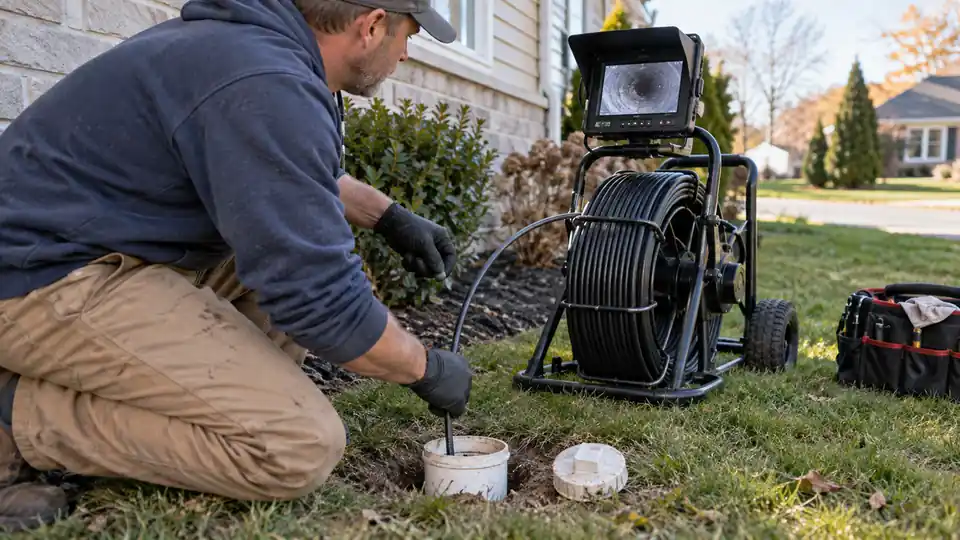
A sewer camera can turn a messy excavation guess into a much clearer diagnosis. Instead of opening walls, floors, or landscaping to chase a suspected break, you can send a waterproof camera through the line, watch the footage, and document what is actually happening inside the pipe. The challenge is choosing a system that matches the job. Cable length, camera-head diameter, cable stiffness, display quality, recording functions, self-leveling, and locating capability all affect how useful the camera will be once the pipe gets dark, wet, and crowded with bends.
A common mistake is focusing on screen size or advertised video resolution while overlooking the camera head and push cable. A large monitor cannot compensate for a cable that cannot reach the problem or a camera head that will not pass through the access point. Buyers also have different priorities. A homeowner may prefer a compact, ready-to-use kit, while a drain professional may need self-leveling footage, a 512Hz sonde, a distance counter, and enough cable for long underground runs. The Sanyipace 100-foot self-leveling system is our Best Overall because it brings together the core features most sewer-camera buyers need without moving into the longest and most cumbersome systems.
If you need a quick comparison, the table below highlights the important differences and links directly to each detailed review.
Best Sewer Cameras Comparison Table
| Product | Best For | Cable Length | Display and Camera | Key Feature |
|---|---|---|---|---|
| Sanyipace 100-Foot Self-Leveling Camera | Best overall | 100 feet | 9-inch screen, 1080P listed | Self-leveling and 512Hz locator |
| ChoosePRO 100-Foot HD Sewer Camera | Best value | 100 feet | 7-inch IPS screen, 1080P | 16x zoom and 8+ hour battery claim |
| Kcapyn 100-Foot Pipe Camera | Best portable kit | 100 feet | 5-inch IPS screen, 1080P | Integrated storage toolbox |
| Holdwells 512Hz Sewer Camera | Best for broad viewing | 30 meters | 9-inch IPS screen, 1080P listed | Locator, distance counter, and 145-degree view |
| Sanyipace 230-Foot Camera | Best for long runs | 230 feet | 10.1-inch IPS screen, 1080P | 7mm cable and self-leveling |
| 9-Inch Self-Leveling Industrial Camera | Best budget self-leveling option | 100 feet | 9-inch HD screen, 1080P listed | 5mm cable and portable trolley |
| VEVOR 164-Foot Sewer Camera | Best for extended reach | 164 feet | 4.3-inch screen, 1080P listed | Self-leveling probe and metal reel |
| 10-Inch Locator Sewer Camera | Best for documentation | 100 feet | 10-inch IPS screen, 1080P | Audio, video, photos, and 512Hz sonde |
| Hialemi Portable 300-Foot Camera | Best premium long-reach system | 300 feet | 9-inch IPS screen, 1080P listed | Wheeled case, locator, and audio recording |
The detailed reviews explain how each system differs, including the trade-offs that may matter more than a long feature list.
1. Sanyipace Sewer Camera Self-Leveling with Locator , Best Overall

The Sanyipace 100-foot system covers the central needs of a typical sewer inspection without making the operator decode sideways footage or manually estimate the camera’s position. Its self-leveling function keeps the image upright as the probe moves through bends, while the 145-degree viewing angle gives a broad look at pipe walls. The listing also specifies 5x zoom, a 9-inch IPS display, a 32GB TF card, and a real-time distance counter, so the system is suited to inspections that need clear records rather than a quick glance at a clog.
The built-in 512Hz locating system adds practical value after you spot a suspected defect. Far and near modes help move from a wider search to a more focused position, and the listing identifies sensitivity adjustments for different pipe materials. That combination can be useful when a homeowner or contractor needs to mark a repair area before digging. A sapphire lens and IP68 camera rating provide reassuring protection for wet, abrasive work, although careful rinsing and drying after corrosive exposure remains sensible.
Pros
- Self-leveling footage stays upright through twisted sections.
- 512Hz locator includes far and near operating modes.
- 9-inch display, 145-degree view, and 5x zoom support detailed viewing.
- Distance counter and recording help document defect locations.
- 100-foot semi-rigid cable suits many residential and contractor inspections.
Cons
- The 23mm camera head may not pass through every narrow access point.
- The feature-rich system is more equipment than an occasional homeowner may need.
This is the best fit for buyers who want one serious inspection system for drains, sewer laterals, and property documentation. A smaller inspection camera may be easier to carry for occasional indoor work, while a longer system is better for unusually deep runs. For most buyers comparing full sewer-camera systems, though, the balance of self-leveling, locating, recording, and usable reach is unusually practical.
To buy this product, click here.
2. ChoosePRO HD1080P 18mm Sewer Camera , Best Value

The ChoosePRO system focuses on the features that make a sewer camera less frustrating to operate. Its twist-unlock reel is intended to release and secure the cable quickly, which could be welcome during a job where the operator is repeatedly feeding and retrieving the line. The 18mm camera head is smaller than several other picks here, and the 100-foot marked cable gives buyers a useful reach for many home and light contractor inspections. The 7-inch IPS monitor keeps the package more compact than systems built around 9- or 10-inch screens.
Recording is straightforward, with a listed 32GB card, instant playback, and USB-C transfer support. The listing also specifies 16x zoom, six adjustable LEDs with three brightness levels, a 5000mAh battery, and compatibility sleeves for different pipe situations. Those details make this system attractive for buyers who want to capture footage without building a separate documentation setup. It does not list a locator or self-leveling function, so it is better suited to visual inspection and depth tracking than to pinpointing a buried defect from the surface.
Pros
- 18mm camera head can suit tighter access points than larger probes.
- Twist-unlock reel is intended to simplify cable handling.
- 7-inch IPS display and listed 1080P camera provide a clear viewing setup.
- 32GB recording storage and USB-C transfer support practical documentation.
- Listed battery capacity supports extended inspection sessions.
Cons
- No locator or self-leveling feature is listed for this model.
- The smaller display may be less comfortable for team viewing outdoors.
ChoosePRO makes sense for a buyer who wants a capable 100-foot camera with convenient reel handling and recording, without paying for a locating system that may rarely be used. It is especially appealing for maintenance staff and homeowners who need evidence of a blockage or damaged section. Buyers who regularly excavate based on camera findings should step up to a model with a verified sonde and locator.
To buy this product, click here.
3. Kcapyn 100-Foot Pipe Inspection Camera , Best Portable Kit

Kcapyn takes a different approach by integrating the inspection unit and accessories into a portable toolbox. That matters on a property where the camera may sit in a truck, move between buildings, or be stored between occasional drain inspections. Rather than hunting for hooks, lenses, and small parts in a loose bag, the toolbox keeps the kit together and ready to carry. The 100-foot semi-rigid cable reaches far enough for many residential lines, tanks, and maintenance tasks.
The listing specifies a 17mm plumbing snake, a 5-inch IPS DVR display, 1080P video, six LEDs, and a 5000mAh battery. The smaller screen makes the overall system easier to pack, while one-touch photo and video recording can preserve evidence for a repair discussion. Its strengths are portability and simplicity. There is no listed self-leveling function or locator, so the operator should expect to interpret the camera orientation and use the cable markings rather than locate the probe from above.
Pros
- Integrated toolbox keeps accessories organized for transport.
- 17mm camera head supports relatively narrow access points.
- 100-foot cable provides useful reach for household and maintenance work.
- 1080P recording and a built-in 32GB card support documentation.
- Portable format suits homeowners, inspectors, and mobile service work.
Cons
- The 5-inch screen is less convenient for group viewing than larger monitors.
- No self-leveling or locating capability is listed.
This is a sensible pick for buyers who value a tidy, grab-and-go kit more than advanced underground locating. Imagine checking a recurring basement drain problem and then placing the entire system back on a shelf without loose parts rolling under a workbench. For long commercial runs or repairs that require precise excavation marks, a locator-equipped camera will be a better match.
To buy this product, click here.
4. Holdwells Sewer Camera with 512Hz Locator , Best for Broad Viewing
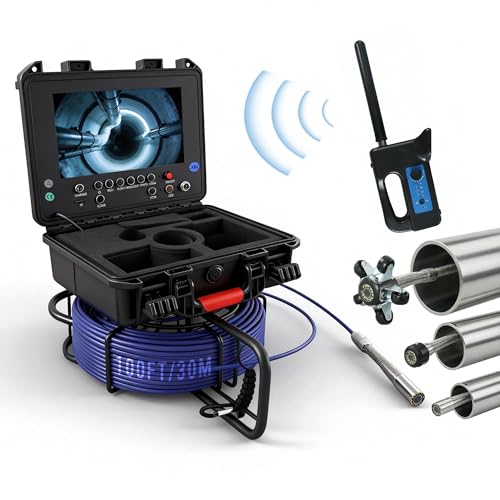
Holdwells combines a large monitor with a locating system in a 30-meter inspection camera. The 9-inch IPS display is helpful when a technician needs to see fine changes in a dark pipe or share the view with a property owner standing nearby. Its 145-degree viewing angle and 12 adjustable LEDs are listed for broad, illuminated footage, while the 32GB card supports photo and video capture from the start.
The camera head is listed at 23mm, paired with a 5mm flexible cable and accessories described for larger pipe openings. Those details suggest a flexible system for common inspection access points, though buyers should measure their cleanout or entry route rather than assume every pipe will accept the probe. A 512Hz transmitter, locator, and distance counter give this model a more complete diagnostic workflow than basic visual cameras. The 4500mAh battery is listed for up to eight hours of operation, which may suit a full workday with sensible breaks and charging practices.
Pros
- 512Hz transmitter and locator support underground probe positioning.
- Large 9-inch IPS monitor improves shared viewing.
- 145-degree view and 12 adjustable LEDs aid dark-pipe inspection.
- Distance counter and 32GB card support organized reports.
- Sapphire lens and IP68 rating are listed for demanding wet environments.
Cons
- The 23mm camera head requires adequate access clearance.
- A large monitor and full locator package may be unnecessary for simple clog checks.
Holdwells fits contractors, home inspectors, and serious property owners who want a broad screen and surface locating in one package. It is particularly useful when a customer wants to see the footage while the operator explains a root intrusion or damaged joint. Buyers working through very narrow branch lines should compare the stated probe diameter with their access opening before choosing it.
To buy this product, click here.
5. Sanyipace 230-Foot Sewer Camera with Locator , Best for Long Runs

For a long lateral, a 100-foot reel can leave the operator staring at the end of the cable while the suspected problem remains farther downline. This Sanyipace extends the working reach to 230 feet and uses a listed 7mm semi-rigid fiberglass push rod, giving it a better fit for lengthy inspection routes. The cone-shaped probe design is described as helping reduce snagging, while the real-time distance counter can connect a visible defect with a measured cable position.
The 10.1-inch IPS screen gives this system a generous viewing area, and self-leveling keeps the image upright as the probe travels through bends. A built-in 512Hz transmitter and separate locator support surface positioning, with far and near modes for broader searching and closer pinpointing. Twelve LEDs, a 145-degree lens, 5x zoom, a speaker, and date-and-time recording add documentation value. The trade-off is physical scale. A 230-foot reel and 7mm cable are better suited to serious fieldwork than a quick inspection under a kitchen sink.
Pros
- 230-foot cable reaches substantially farther than standard 100-foot systems.
- 7mm push rod is suited to long inspection routes.
- 10.1-inch screen makes footage easier to inspect and share.
- Self-leveling, 512Hz locating, and distance counting support diagnosis.
- Recording, speaker, date stamping, and 32GB storage aid customer reports.
Cons
- The longer reel requires more storage and transport space.
- Its long-reach configuration may be excessive for short residential branches.
This is the option for contractors, municipal maintenance crews, and property managers who regularly face long runs. Picture a camera disappearing down a long lateral while the display continues to show an upright image and the counter tracks progress. Buyers who inspect only short lines should save space and handling effort with a 100-foot system instead.
To buy this product, click here.
6. 9-Inch Self-Leveling Industrial Sewer Camera , Best Budget Self-Leveling Option
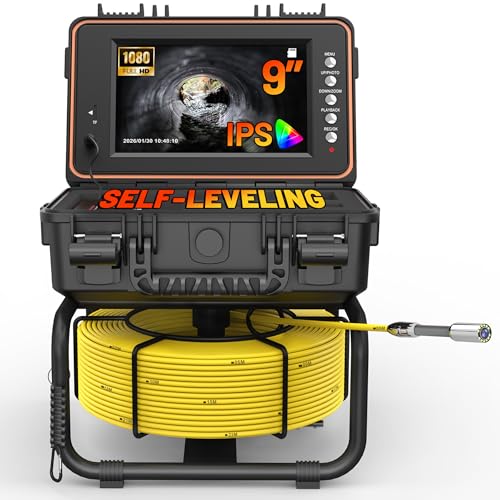
This 100-foot camera concentrates on the features that make footage easier to interpret. The self-leveling probe keeps the image upright, while the 9-inch display gives a comfortable view of the pipe interior. The listing specifies a 5mm cable, 12 adjustable LEDs, 5x digital zoom, DVR recording, and a 32GB card. That makes the system a practical step above basic non-recording inspection cameras for homeowners, builders, and smaller service operations.
A portable trolley adds convenience when the reel needs to move across a driveway or jobsite. The stated 5100mAh battery is listed for six to eight hours of continuous use, though actual runtime can vary with screen brightness, lighting, and recording. The cable is described as flexible enough for bends and tight 90-degree elbows while retaining abrasion resistance. There is no listed 512Hz locator, so this model is aimed at seeing and documenting the issue rather than marking its position for excavation.
Pros
- Self-leveling camera simplifies orientation during inspection.
- 9-inch monitor provides a comfortable viewing area.
- 5mm, 100-foot cable balances flexibility and reach for many jobs.
- 12 LEDs, 5x zoom, DVR, and 32GB storage support inspection records.
- Portable trolley makes the reel easier to move around a property.
Cons
- No sonde or locator is listed for finding the camera underground.
- The 5mm cable may offer less pushing force than thicker long-run systems.
This camera suits buyers who care about upright footage and a large screen but do not need to pinpoint the probe from the surface. It can be a sensible choice for checking recurring drain problems, documenting construction work, or reviewing a line before repair. Choose a locator-equipped model if the inspection routinely leads to excavation or precise repair marking.
To buy this product, click here.
7. VEVOR 164-Foot Self-Leveling Sewer Camera , Best for Extended Reach
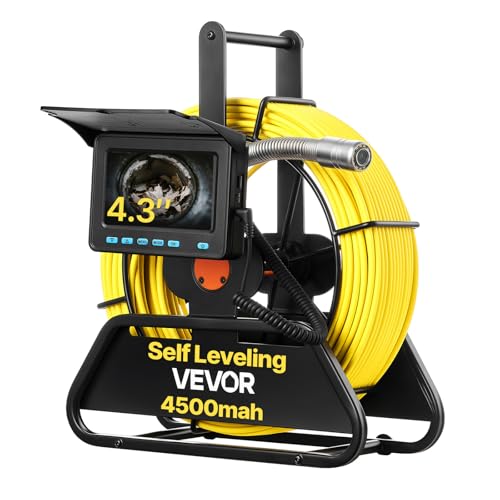
VEVOR fills the space between common 100-foot cameras and much longer professional reels. Its 164-foot semi-rigid fiberglass cable offers extra reach for residential laterals, septic-related inspections, roof downspouts, and ducts, while the listing gives a suggested pipe diameter range of 50 to 150mm. The self-leveling 0.9-inch probe keeps the image upright, and the IP68 waterproof sapphire lens is listed for wet inspection work.
The 4.3-inch 1080P display is much smaller than the monitors on several other picks, which keeps the package relatively focused on portability. Twelve LEDs with three brightness levels illuminate dark spaces, and the 16GB card supports photos and video. A heavy-duty metal reel helps organize the cable. The listed battery runtime is up to five hours, so this camera is better for planned inspection sessions than for an entire day of continuous operation without charging.
Pros
- 164-foot cable provides meaningful extra reach over 100-foot systems.
- Self-leveling probe keeps the image oriented through bends.
- Listed pipe range covers several common residential and service applications.
- IP68 sapphire-lens camera and adjustable LEDs suit wet, dark lines.
- Metal reel supports organized storage and transport.
Cons
- The 4.3-inch display is less comfortable for detailed group viewing.
- Listed battery runtime is shorter than several competing systems.
VEVOR is a useful match for buyers who need more reach but still want a comparatively manageable inspection setup. A contractor checking a long downspout or residential sewer lateral may appreciate the extra cable without moving to a 230- or 300-foot reel. It lacks the listed locator found on some alternatives, so surface pinpointing is outside its main role.
To buy this product, click here.
8. 10-Inch 512Hz Locator Sewer Camera , Best for Documentation

This system is built around inspection records as much as live viewing. Its 10-inch IPS screen gives the operator a large image, while the listed DVR functions capture AVI video, JPG photos, and audio logs. A keyboard can be used to enter text and symbols during an inspection, which is useful when several properties or multiple defects must be kept separate. The 100-foot, 7mm cable offers a useful middle ground for many residential and contractor jobs.
The listing specifies self-leveling, a 145-degree lens, 12 adjustable LEDs, 5x zoom, and a meter counter with metric and imperial conversion. It also identifies a 512Hz transmitter and a locator-oriented design for underground blockage detection. The 4500mAh battery is listed for up to eight hours. Buyers should verify the exact locator components included with the current package before purchase, especially if surface pinpointing is the deciding feature, since accessory bundles can vary by listing.
Pros
- 10-inch IPS display makes shared footage easy to review.
- Audio, photos, video, keyboard notes, and 32GB storage support thorough reports.
- Self-leveling and 5x zoom aid interpretation of pipe defects.
- 7mm cable offers a sturdy configuration for deeper residential runs.
- 512Hz sonde and meter counter support location-based diagnosis.
Cons
- The larger monitor adds bulk compared with compact inspection kits.
- Buyers should confirm the exact locator accessories included in the selected listing.
This is a strong fit for inspectors and contractors who need to hand a customer a clear visual record rather than a verbal description. Audio narration and on-screen notes can make a muddy pipe inspection much easier to revisit later. Buyers who simply need to see whether a branch is blocked may find the documentation controls more elaborate than necessary.
To buy this product, click here.
9. Hialemi Portable 9-Inch Sewer Camera with Locator , Best Premium Long-Reach System

Hialemi is the most ambitious system in this group, with a listed 300-foot, 7mm cable and a suitcase-style body with a telescoping handle and swivel casters. That format matters when a long reel must be moved by one person across a jobsite. The system includes a listed 512Hz transmitter and locator, self-leveling, a distance counter, 5x zoom, and a 9-inch IPS screen. Together, those features target contractors and inspectors who need to reach far into a line and document what they find.
The camera listing also specifies a 145-degree lens, 12 adjustable LEDs with five brightness levels, DVR recording, a microphone and speaker, and a 4500mAh battery rated for eight to ten hours of continuous operation. The 32GB card can be expanded according to the listing, and files can be transferred to a computer. The premium trade-off is obvious in physical scale and cost category. A 300-foot reel is valuable only when the work regularly demands that reach, and the camera head should still be checked against the access opening before purchase.
Pros
- 300-foot cable supports unusually long inspection runs.
- Wheeled carry-case design simplifies movement of the complete system.
- 512Hz locator, self-leveling, and distance counter support precise field work.
- 9-inch display, 5x zoom, and adjustable lighting aid detailed viewing.
- Audio and video recording help create useful customer documentation.
Cons
- The long-reach reel needs substantial storage and transport space.
- Its capabilities exceed the needs of many short residential inspections.
Hialemi is for the buyer who already knows that 100 or 164 feet will leave too much line unexplored. A contractor investigating a long sewer lateral can roll the case to the cleanout, deploy the cable, and record both footage and commentary without carrying separate components. For occasional drain checks, the smaller Sanyipace or ChoosePRO systems are easier to justify and handle.
To buy this product, click here.
How to Choose the Best Sewer Camera
Match the Camera Head to the Access Point
The camera head must pass through the cleanout, drain opening, or conduit entrance before cable length matters. Several systems here list camera heads around 17mm to 23mm, while the probe housing, spring tip, and any guide accessories can affect practical clearance. Measure the opening and check the manufacturer’s stated dimensions rather than relying on the cable diameter alone. A thinner cable does not automatically mean a smaller camera head.
Choose Cable Length for the Actual Run
A 100-foot cable is a sensible middle ground for many residential inspections, while 164 feet, 230 feet, and 300 feet serve longer laterals and commercial work. Extra cable adds reach, but it also adds reel size, weight, storage needs, and more cable to clean after a muddy inspection. Think about the longest line you regularly inspect, then leave enough practical margin for bends and the distance from the reel to the access point.
Understand Self-Leveling
A self-leveling camera attempts to keep the image upright as the probe rotates in the pipe. This can make cracks, offsets, corrosion, and root intrusion easier to interpret. A camera without self-leveling can still show a useful image, but the operator may need more patience to understand orientation after several bends. Self-leveling is especially helpful when footage will be shared with a customer who was not standing beside the monitor.
Decide Whether You Need a Locator
A camera shows the inside of a line. A sonde and compatible locator help identify where the probe is positioned from above ground. That difference matters if the repair plan involves excavation, wall access, or marking a buried defect. Systems in this roundup list 512Hz locating capability, while others focus on visual inspection and recording. Confirm that the package includes the locator hardware you need, rather than assuming every mention of a 512Hz transmitter means a complete locating kit.
Separate Camera Resolution from Screen Resolution
A listing may identify a 1080P camera, a 1080P display, or both. Those are separate specifications. Camera resolution affects the captured image, while display resolution affects what you see on the monitor. Bright LEDs, lens quality, viewing angle, and a clean camera lens also influence real-world visibility inside a dark, wet pipe. A bigger screen is helpful, but it cannot repair a poor signal or a lens covered in debris.
Think About Recording and Battery Use
Recording is valuable for insurance files, customer explanations, before-and-after comparisons, and future maintenance decisions. Look for the card capacity, file-transfer method, photo and audio support, and whether the system includes a distance counter. Battery claims are generally based on stated conditions, so screen brightness, LED intensity, and continuous recording can change runtime. Charge the unit before a long job and follow the manufacturer’s care instructions for the battery and camera head.
Best Sewer Cameras FAQ
What Is the Best Sewer Camera for Most Buyers?
The Sanyipace 100-foot self-leveling camera is the strongest overall fit in this roundup because it combines a useful cable length with a 9-inch display, recording, distance counting, self-leveling, and a listed 512Hz locator. Buyers who do not need surface locating may prefer a simpler and more compact system.
Is a 100-Foot Sewer Camera Long Enough?
A 100-foot cable can suit many residential drain and sewer inspections, but it is not automatically enough for every property. Long laterals, large lots, and commercial lines may require 164, 230, or 300 feet. Measure the likely route from the access point and account for bends before choosing the reel.
What Does a 512Hz Locator Do?
A 512Hz transmitter, often called a sonde, sends a signal that a compatible locator can track from above ground. This helps estimate where the camera head is positioned. It can make repair marking more precise, but the camera’s video and the locator’s signal serve different purposes.
Do I Need a Self-Leveling Camera?
Self-leveling is helpful if you need to interpret pipe-wall defects, explain footage to customers, or create consistent inspection records. It is less critical for a quick check to see whether a line contains standing water or a visible obstruction. The feature adds convenience, but it should be weighed alongside cable length and camera-head size.
Does a Larger Screen Mean a Better Sewer Camera?
A larger screen can make details easier to share and review, especially outdoors or with several people nearby. It does not prove that the camera itself captures a better image. Compare camera resolution, lighting, lens angle, recording quality, and screen specifications separately.
Can These Cameras Inspect Any Pipe?
No. A camera must fit through the entry opening, and its cable must be suitable for the pipe’s bends and length. Pipe condition, debris, standing water, and tight offsets can also limit progress. Check the listed camera-head size and intended application before sending a probe into a line.
How Should a Sewer Camera Be Maintained?
Follow the manufacturer’s cleaning and storage directions. In general, rinse appropriate exterior components after dirty or corrosive exposure, dry the camera head and cable, inspect the spring tip and connector, and store the cable without sharp kinks. Keep the display and battery protected from water unless they are specifically rated for exposure.
Should Homeowners Buy a Professional-Style Sewer Camera?
It can make sense for a property manager, frequent DIY renovator, or contractor who expects repeated inspections. For a single suspected clog, hiring a service may be more practical than storing a large reel. If buying one, choose the features you will actually use, such as recording, self-leveling, or locating, rather than paying for unused cable capacity.
Final Verdict
The Sanyipace 100-foot self-leveling camera is the best overall choice for most buyers comparing complete sewer inspection systems. Its 9-inch display, self-leveling image, listed 512Hz locator, distance counter, recording capability, and 100-foot cable cover the main tasks involved in diagnosing and documenting a residential or contractor-level sewer problem. The ChoosePRO system is the better value-oriented alternative for buyers who want a compact 100-foot camera, useful recording, and convenient reel handling without a listed locator. Kcapyn is appealing for portable storage, especially when keeping accessories organized matters.
Long-run work calls for a different approach. The Sanyipace 230-foot model and Hialemi 300-foot system provide substantially more reach, while VEVOR’s 164-foot camera offers a middle path for buyers who regularly outgrow 100 feet. Before ordering, measure the access opening, estimate the longest inspection route, and decide whether you need to mark the camera from above ground. The best sewer camera is the one whose probe fits the pipe, whose cable reaches the problem, and whose records help you make the next repair decision with less guesswork.
